HOME · WORKS · STUDIO · DOGME AI 25 · AI & CREATIVE POLICY · COLLABORATIONS
FRIMAGE / INDEPENDENT RESEARCH
AI & creative
practice:
policy and impact.
How can public policy, law and economic models support creative work with artificial intelligence without weakening artists’ rights, incomes or freedom to create?
Frimage develops an independent research practice focused on the policies shaping the use of AI in the arts and creative industries. We start with artists’ actual practices, the tools they use and the changing conditions of creative work. We are starting small in Fribourg, with a local focus, and are open to collaborations across Switzerland and anywhere in the world.
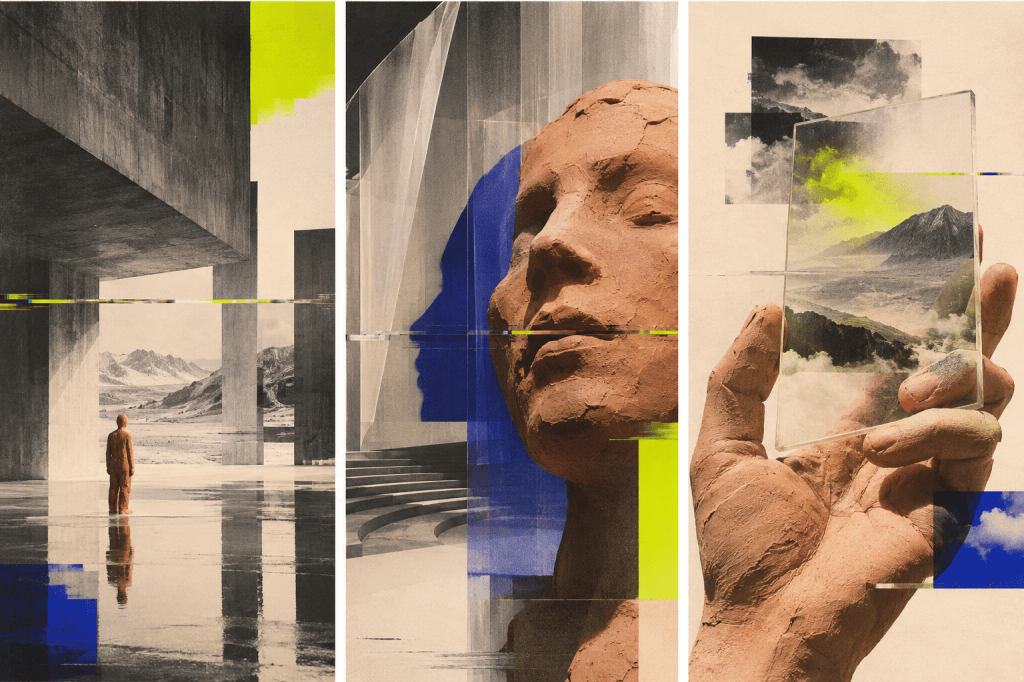
03 / AUTHORSHIP STUDY — RIGHTS, CONTRIBUTION, TRANSFORMATION
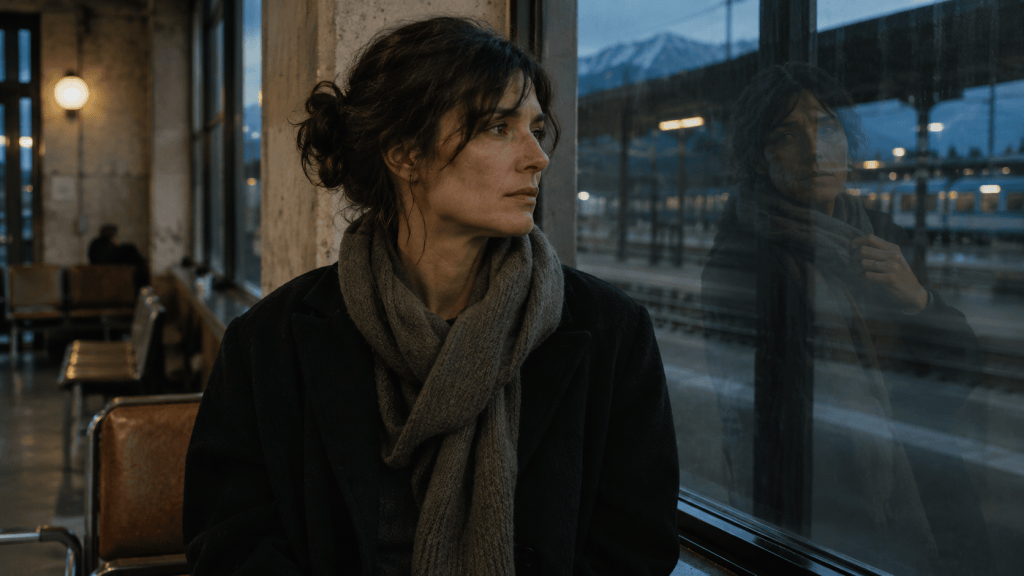
FRIMAGE / CASE STUDY 001
REALISM / The Human Test
The first case study: a short film based on an original screenplay written without AI, accompanied by research into the perception of realism.
Our research questions
01 / Rights, authorship & training data
How are creative works used to train models? What forms of consent, licensing, remuneration, opt-out and attribution are possible? How can voices, images, styles and artistic identities be protected while allowing experimentation?
02 / Creative labour & remuneration
How is AI changing occupations, value chains, contracts and artists’ bargaining power? Which commissioning, licensing, revenue-sharing and remuneration models can support a sustainable creative economy?
03 / Transparency, provenance & trust
How should human contributions, AI tools and transformations to a work be documented? What disclosure, provenance and credit practices are useful to audiences, artists, distributors and institutions?
04 / Cultural policy & institutions
How can cultural policy, public funding bodies, foundations, festivals, museums and institutions respond to AI in creative practice? How can cultural diversity, access to tools and artistic autonomy be supported?
Artistic experimentation as a research tool
We want to connect policy analysis with concrete artistic experiments. Moving-image works, installations, sound pieces, performances and prototypes can make visible situations that often remain abstract in debates about AI: a remuneration model, a production chain, a question of authorship, a change in creative labour or a possible future for an artistic profession.
These experiments are not presented as statistical proof. They function as case studies, critical objects and tangible scenarios. They help formulate better questions, reveal tensions and explore possible consequences. They are considered alongside interviews, document analysis, academic research, available data and comparisons of policy approaches.
A four-part research cycle
- Policy process — understand the actors, institutions and interests shaping public priorities and policy agendas.
- Impact analysis — examine the potential and observed effects of policy choices on artists, creative practices and cultural ecosystems.
- Interdisciplinary perspectives — connect political science, economics, law, sociology, technology, design and artistic practice according to the question.
- Applied policy analysis project — turn a defined question into a documented study with an explicit method, evidence, limitations and proportionate recommendations.
Methods & formats
Depending on the question, we aim to draw on legal and document analysis, case studies, interviews with artists and institutions, stakeholder mapping, international comparisons, impact analysis and foresight. Artistic experiments may take the form of commissions, prototypes, workshops or collaborative projects whose process is documented.
Research & publications
Research notes, policy briefs, public-policy analysis, case studies and thematic reports.
Art & critical demonstrators
Experimental works, moving-image essays, installations, sound pieces and prototypes created to illustrate and question the issues under study.
Starting small in Fribourg. Collaborating everywhere.
We are starting small in Fribourg, with particular attention to the local artistic and cultural community. We are of course open to collaboration across Switzerland and anywhere in the world. Our ambition is to build research from concrete projects, encounters and questions that matter to the people involved.
Independent and transparent research
We distinguish between established evidence, hypotheses, interpretation and recommendations. Sources, data limitations and uncertainty are explicit. Artistic experiments are identified as such and document human contributions, tools used and their limitations. This work aims to inform public debate; it does not replace academic research, public institutions or the perspectives of people directly affected.
Our methodological approach is informed in part by ETH Zurich’s MAS in Technology and Public Policy, which connects policy process, impact analysis, interdisciplinary electives and an applied policy analysis project. Frimage is an independent initiative and is not affiliated with ETH Zurich or a representative of its programme.
Explore the MAS in Technology and Public Policy — ETH Zurich ↗

